Virtual Dental Consultation for Cosmetic Cases: What Works
A virtual dental consultation can start a cosmetic case, not finish it. What a remote consult shows, what needs the chair, and where a preview fits.
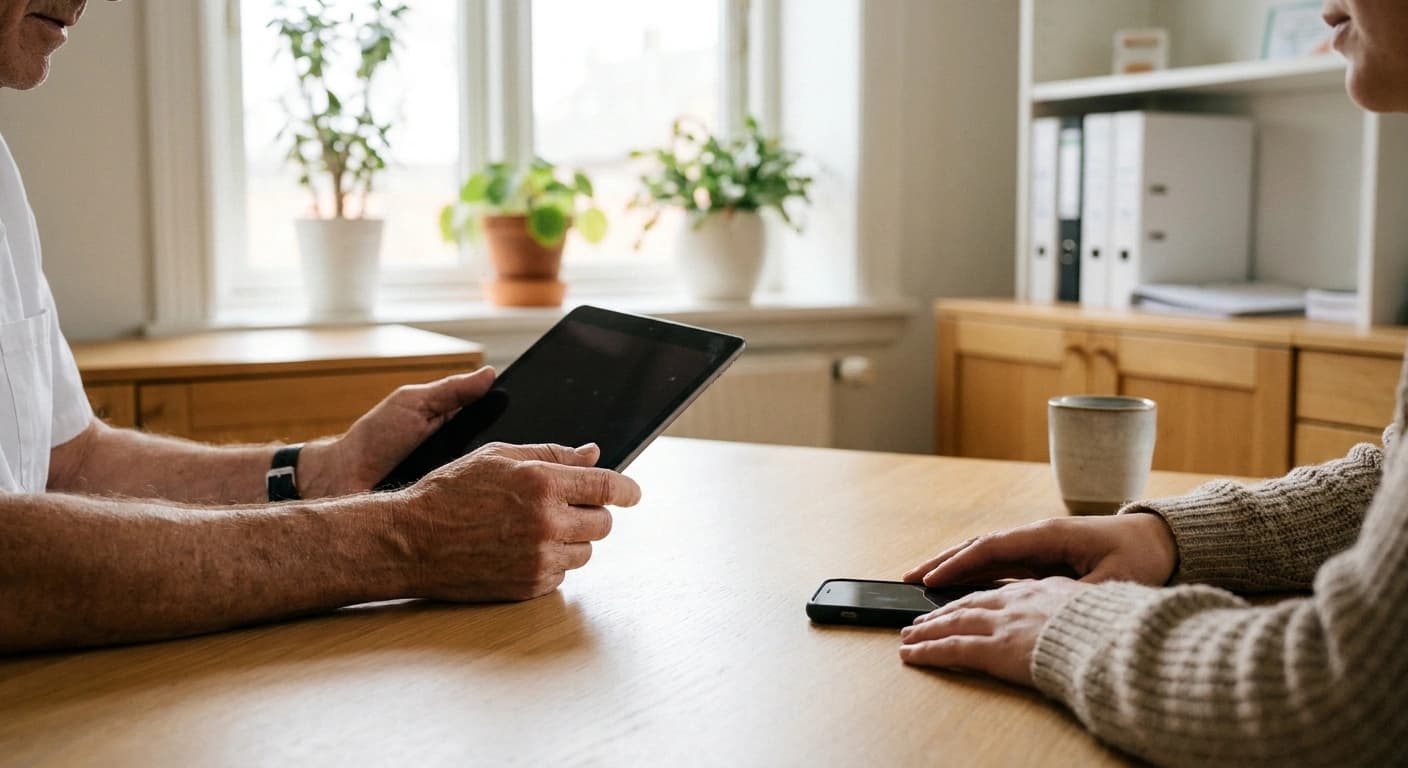
What is a virtual dental consultation, and what can it do for a cosmetic case?
A virtual dental consultation is a remote first conversation, usually built on a photo, a short form or a video call, that sets expectations and books the in-person exam. For a cosmetic case it is good at one job: showing a patient what could change and getting them into the chair. It cannot diagnose, check the bite, gum health or existing restorations, or support a firm quote.
That split matters because the term gets sold as more than it is. Practices hear "virtual consultation" and picture a video call that closes a veneer case from the patient's couch. In practice, the remote step opens the case, the chair confirms it, and the days in between decide whether it closes.
This post walks through where the line sits, which parts of a cosmetic consult belong online, which belong in the operatory, and how a smile preview keeps the case alive between the two. If you are working on case acceptance more broadly, the same logic applies: every step should move the patient toward a decision, not just toward more information.
Why do practices overestimate the virtual consult?
Because the remote step feels like the consult. A patient sends a photo, someone on the team replies with encouragement and a ballpark, and it feels like progress. Then the patient arrives for the exam with a number in their head that the clinical findings no longer support.
The cost shows up later. A patient who heard "around this much" online and hears a different figure in the chair does not think the plan changed. They think the practice moved the goalposts. That is a trust problem, and trust problems end cases.
The fix is not to drop the remote step. It is to give it a narrower job and do that job well.
Which parts of a cosmetic consult belong online?
The remote step is strongest when it handles the conversation, not the clinical decision. Four things fit well:
- Goals and concerns. What bothers the patient about their smile, what they have tried, what prompted them to reach out now. This is pure listening, and it does not need the chair.
- What is possible, in broad strokes. Whether their concern is the kind of thing veneers, whitening or other cosmetic work typically addresses, framed as options to discuss, never as a plan.
- A budget range conversation. Not a quote. A range for the category of treatment, clearly labeled as dependent on the exam, so the in-person number is not a surprise.
- Booking. The remote step has done its job if the patient leaves it with an exam on the calendar.
Done this way, the virtual consult works like a good front desk call with better context. The patient arrives prepared, and the team arrives knowing what the patient wants.
Which parts still need the chair?
Everything that depends on clinical information. A cosmetic plan rests on findings a photo cannot supply:
- The exam itself, including any radiographs the dentist decides are needed.
- Bite and function, which change what is realistic for veneers and how long the work will last.
- Gum health and existing restorations, which can change the sequence and the scope of treatment.
- Shade in real light, which a phone camera with indoor lighting does not capture reliably.
- Treatment options and the real quote, which only make sense once the dentist has seen everything above.
None of this is news to a clinician. The point is operational: the remote step should never promise anything that depends on this list. When the team keeps that boundary, the in-person visit confirms what the patient already expects instead of correcting it.
Where does a smile preview fit between the two visits?
This is where most cosmetic cases are actually won or lost. The patient sits for the exam, hears the plan, sees the number, and goes home to "think about it." At home they try to explain veneers to a spouse or partner with nothing to show but a treatment plan printout. The case stalls there, which is the pattern behind why patients go quiet after the consult.
A visual changes that conversation. When the patient can show someone at home what their own smile could look like, the decision stops being abstract. That is the gap Smile PreVue was built for.
Smile PreVue turns a patient photo into a photorealistic veneer or whitening preview in about 20 to 30 seconds, with 20+ VITA shades, chairside on an iPad or in a desktop browser. The practice can then share that preview with the patient the same day by email, or by text with the patient's double opt-in, and as a clinic-branded PDF report the patient can keep. Processing is HIPAA-compliant, running on Google Cloud's Vertex AI under the Google Cloud BAA, with no hardware to buy.
Two things are worth being clear about. First, Smile PreVue is a chairside tool used by the practice. It does not run patient self-uploads, lead pages or video calls, so it does not replace whatever your team uses for the remote first step. Second, a preview is a visual aid for the conversation, never a promise of the final result. The finished work depends on the clinical plan the dentist makes in the chair.
What the preview does is carry the case through the riskiest days. Our post on the handoff after a cosmetic consultation covers why those days matter so much, and the full list of what the product does is on the Smile PreVue features page.
How should the three steps fit together?
Think of the cosmetic consult as three steps with three different jobs:
| Step | Where it happens | Its job |
|---|---|---|
| First conversation | Remote: photo, form or video call | Hear goals, set expectations, book the exam |
| Exam and plan | In the chair | Diagnose, plan, present options and the real quote |
| Follow-through | At home, with a shared preview | Help the patient decide with the people they decide with |
Each step should hand off cleanly to the next. The remote step should not quote. The exam should not leave the patient with nothing to show at home. And the follow-through should give the team a reason to reach back out that is about the patient's smile, not a generic reminder.
If you measure the funnel, track each handoff on its own. A drop between the virtual consult and the booked exam is a different problem from a drop between the exam and the yes. Our guide to measuring consultation conversion breaks down how to separate them.
What should a practice ask of virtual consultation software?
The category is broad. Some tools are video platforms, some are lead-capture pages, and some bundle a simulation into the remote step. Before you commit, ask a few plain questions:
- Is there a BAA? Patient photos and health details are protected information. Any tool that stores or processes them should be covered by a business associate agreement, and the vendor should tell you where the photos go.
- Is a preview labeled as a preview? Any image shown to a patient before an exam should be clearly framed as an illustration, not a result.
- How does the patient get back to the schedule? The best remote step ends with a booked exam, not a "we will be in touch."
- Who on the team owns it? A remote consult that nobody answers within a day is worse than none.
Vendors frame this category differently. SmileViz, for example, sells its Pro plan around three "touchpoints," listing a "Branded consult page, live in 5 seconds," built-in patient lead management and self-simulation while patients wait (per smileviz.com, fetched 2026-10-26). That is a lead-capture job aimed at the first step. It is a different job from the chairside preview and the same-day share after the exam, and many practices will want to think about both steps separately.
FAQ
Can a dentist quote veneers from a photo?
Not a firm quote. A photo can support a conversation about the category of treatment and a broad range, but the real number depends on the exam, the bite, gum health and existing restorations.
Is a virtual dental consultation HIPAA compliant?
Only if the tools under it are. Ask each vendor whether it signs a business associate agreement and where patient photos are stored and processed.
Does a smile preview promise the final result?
No. A preview is a visual aid that helps a patient picture the change. The final result depends on the clinical plan and the work itself.
Should the virtual consult replace the in-person exam?
No. It works best as the first step that books the exam, not as a substitute for it.
Close more of the cases your remote step starts
A virtual consult opens the door. The chair confirms the plan. A preview the patient can share at home is often what turns "I need to think about it" into a yes. Start a 3-day free trial on the web at app.smileprevue.com/register with no card required, or download the iOS app and start from the App Store.
More from the Blog
Does Smile Simulation Increase Case Acceptance?
Does smile simulation increase case acceptance? Vendors claim 38% to triple. Here is what the research shows and when a preview helps a patient decide.
Case AcceptanceDigital Smile Analysis vs Smile Simulation: What Differs
What is digital smile analysis, and how is it different from a smile simulation? A plain guide for dentists on what each does before a cosmetic consult.
Case AcceptanceDental Simulation Service vs Chairside AI Software
A dental simulation service returns a designed preview in an hour or days. Chairside software shows it in the visit. How to choose for case acceptance.