Why Patients Say Yes When They Can See Their Smile
Patients decline cosmetic dentistry because they can't picture the result. Smile simulation changes that. Learn how visual previews boost case acceptance rates.
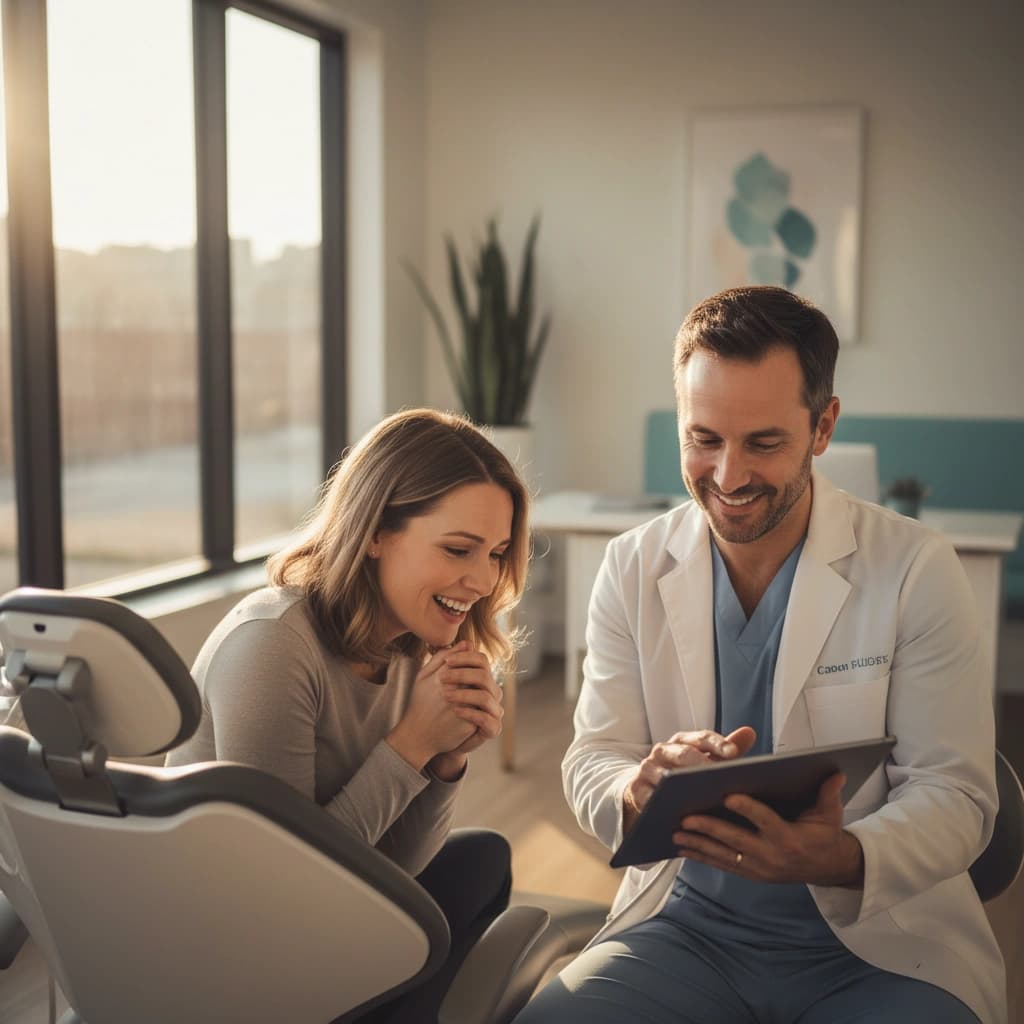
Every dentist has heard it. You spend 20 minutes explaining veneers, whitening, or a full smile makeover. The patient nods politely, says they need to think about it, and walks out the door. Two weeks later, they haven't called back.
This is the case acceptance problem. And it has almost nothing to do with price.
The Real Reason Patients Say No
Research in healthcare decision-making consistently shows the same pattern: people avoid treatments they cannot visualize. When a patient hears "porcelain veneers," they picture a vague idea of improvement. When they see their own face with a new smile, that vague idea becomes a concrete reality.
The gap between hearing about a result and seeing it is enormous. Studies in elective medical procedures show that patients who receive visual previews are 2 to 3 times more likely to move forward with treatment. The reason is simple. You are not asking them to trust a description. You are showing them their future.
Why Words Alone Don't Close Cosmetic Cases
Cosmetic dentistry is different from restorative work. A patient with a cracked tooth needs a crown. The problem is obvious, the solution is clear, and insurance often covers it.
Cosmetic cases are elective. The patient has to want the result badly enough to pay for it out of pocket. That means you are competing with every other discretionary purchase in their life, from vacations to home renovations.
Words and before/after photos of other patients help, but they have a ceiling. The patient is always thinking, "That's their smile, not mine." They cannot bridge the gap from someone else's transformation to their own.
This is where smile simulation changes the conversation entirely.
What Happens When Patients See Their Own Smile
Dr. Ali Obeidi, prosthodontist and cofounder of Smile PreVue, noticed this pattern early in his career. Patients who could see their projected result on their own photo moved forward at dramatically higher rates than those who received verbal explanations alone.
The psychology is well-documented. Visual previews activate what behavioral economists call the "endowment effect." Once a patient sees themselves with a new smile, they feel a sense of ownership over that outcome. They are no longer deciding whether to buy something. They are deciding whether to give up something they already feel is theirs.
This shift in framing is powerful. Instead of "Should I spend $8,000 on veneers?" the question becomes "Can I really walk away from this smile?"
The 30-Second Consultation Shift
Traditional smile design tools require hours of design work, advanced software training, or sending photos to an outsourced lab. By the time the result comes back, the patient has cooled off. The emotional window has closed.
Smile PreVue generates a photorealistic preview in about 30 seconds, right in the consultation room. That speed matters because it lets you show the result while the patient is still emotionally engaged.
Here is the typical flow:
- Snap a photo of the patient on your iPad or upload an existing image.
- Select the treatment type (veneers, whitening, All-on-4, smile makeover, or orthodontic alignment) and choose from 20+ VITA shades.
- In 30 seconds, the AI generates a realistic preview of the patient's new smile.
- Show the before/after comparison during the consultation.
The patient sees their own face. Their own smile. That changes the entire dynamic.
Real Numbers: How Visualization Affects Case Acceptance
Practices that implement smile simulation typically see measurable improvements in their cosmetic case pipeline. While results vary by practice, the data points in the same direction consistently.
Consultation-to-treatment conversion: Practices using visual previews report conversion rates 40 to 60 percent higher than verbal-only consultations for elective cosmetic procedures.
Average case value: When patients can see a more comprehensive result, they often opt for larger treatment plans. A patient who came in asking about whitening might choose veneers after seeing what a full smile transformation looks like.
Time to decision: Instead of a two-week follow-up cycle, many patients decide during the initial consultation. Fewer lost leads, less follow-up work for your front desk.
Referral quality: Patients who love their result (and who were sold on a visual preview) become your most effective marketing channel. They share their before/after with friends and family, driving warm referrals.
Beyond the Sale: Building Trust
This is not about pressure tactics. Smile simulation actually reduces the feeling of being "sold to." When a patient can see the result, the conversation shifts from persuasion to collaboration.
Instead of the dentist explaining why veneers would look great, the patient and dentist are looking at the same image, discussing options together. "What if we went a shade lighter?" "Would you prefer a more natural look?" These are collaborative conversations, not sales pitches.
Patients feel more in control of the decision. They feel like a partner in their own care. That builds trust, and trust leads to better clinical relationships, higher satisfaction scores, and more referrals.
The Portfolio Effect
Every simulation you run with Smile PreVue automatically builds your before/after portfolio. This creates a compounding advantage over time.
New patients who visit your website or social media see real transformations from your practice, not stock photos. Each case you close feeds the next consultation. Your portfolio becomes your best marketing asset, and it builds itself.
When patients complete treatment, you upload the final results photo. Smile PreVue tracks the full journey from simulation to completion, giving you a case portfolio that grows with every patient.
What About Patients Who Still Need Time?
Not every patient will say yes on the spot, and that is perfectly fine. Smile PreVue lets you share the simulation via email, text, or a co-branded PDF. The patient takes their future smile home with them.
When they are sitting at dinner, showing their partner what their new smile could look like, that shared image does the follow-up for you. It keeps the conversation going without your team having to chase them down.
Getting Started Is Simple
Smile PreVue was built to eliminate barriers. There is no special hardware to buy. No multi-day training courses. No per-simulation fees eating into your margins.
Setup takes about 10 minutes. Sign up, invite your team, and start running simulations. The platform runs in any modern browser on desktops, tablets, and iPads.
Pricing is straightforward: $149 per provider per month, with a 3-day free trial and no credit card required to start.
The Bottom Line
Patients say yes when they can see their smile. Not because you talked them into it. Not because you applied pressure. Because they saw the outcome on their own face and decided they wanted it.
That is the simplest, most honest way to grow your cosmetic practice. Show the smile. Let the patient decide.
Ready to see how it works? Start your free trial and run your first simulation in under 10 minutes.
More from the Blog
Smile Simulation on an iPad: Do You Need a Scanner?
Smile simulation on an iPad needs no scanner and no lab wax-up. What a photo-based preview does chairside, how it compares to DSD and TRIOS, and why it matters.
ProductSmile Mockup Software for Dentists: Digital vs Wax-Up
Smile mockup software for dentists shows the finished result chairside in under 30 seconds. Here is how a digital mockup compares to a diagnostic wax-up.
Patient PsychologyWhy Patients Ghost After a Cosmetic Consult
Why patients ghost after a consult is rarely just price. ADA Q2 2026 data explains the silence, and what it tells you to change during the visit itself.