Cosmetic Dentistry Decision-Making in 2026: The Naturalism Shift
Patients now want believable, natural results, not Hollywood veneers. Here is how the naturalism shift reshapes cosmetic dentistry decision-making.
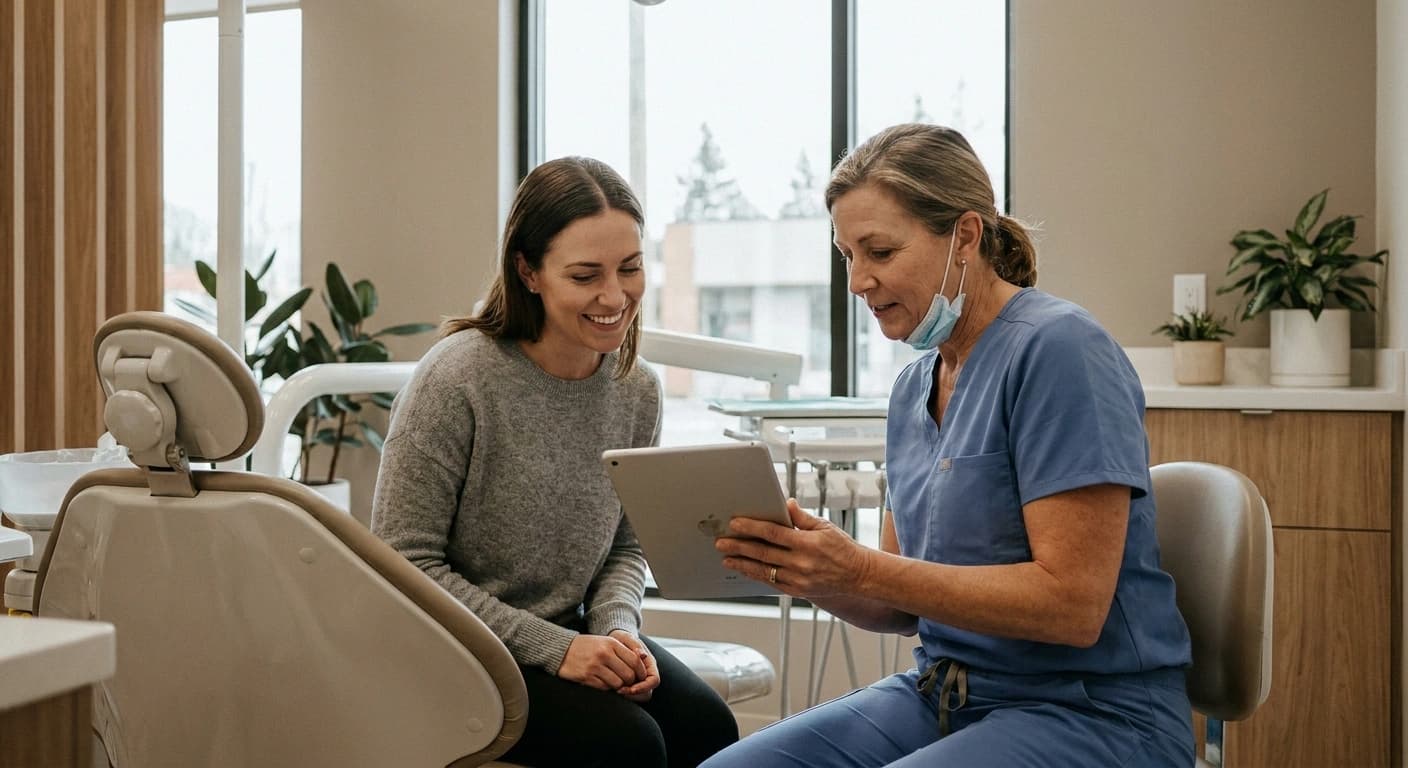
Patients decide on cosmetic dentistry by believability first and price second. Before they think about cost, they need to trust that the result will look like them, only better. In 2026, that trust is harder to earn, because the patient sitting across from you is more afraid of an obvious, overdone result than they were a few years ago.
That fear is the new objection. It hides inside every "I want to think about it," and most consults never name it. Understanding the patient psychology of cosmetic dentistry in this climate is the difference between a case that closes in the room and one that walks out to "research it" and never comes back.
How do patients decide on cosmetic dentistry now?
The modern cosmetic patient walks in more skeptical, not less. They have seen the extreme veneer look on social media, and many of them have decided they do not want it. So even when they genuinely want a better smile, they are holding two fears at once: the fear of spending money, and the fear of an obvious, fake result.
That second fear changes the whole consult. A patient who is worried about looking overdone will not commit on a verbal promise. They discount "you'll love it" and "it'll look natural" because everyone says that. What moves them is proof, seeing a believable version of their own smile, not a description of one.
Cosmetic dentistry itself is going mainstream at the exact moment taste is swinging toward restraint. The two trends are colliding in the operatory.
What changed: the naturalism shift
For years the aspirational cosmetic result was bright, uniform, and unmistakably done. That look is losing appeal. Recent 2026 trend reporting describes patients increasingly rejecting the extreme veneer aesthetic, asking more questions about long-term tooth structure, and preferring subtle, minimally invasive, believable outcomes.
At the same time, the market is expanding fast. The U.S. cosmetic dentistry sector is projected to surpass 18 billion dollars in 2026, growing roughly 14 percent a year, with a reported 19 percent rise in whitening and veneer procedures, according to 2026 trend reporting. More patients are considering treatment than ever, and they are considering it more carefully.
So the demand is up and the standard is higher. Patients want the improvement, but they want it to be quiet. They want to look like the best version of themselves, not like they had work done. A practice that still sells "a brand new smile" is answering a question the patient stopped asking.
There is also a generational layer to this. Younger, credit-savvy patients research longer, compare more, and are more comfortable walking away from a consult that feels like a pitch. The same 2026 trend reporting notes that practices offering flexible payment plans see higher case acceptance among these patients, which tells you two things at once: they are motivated to treat, and they will not be rushed. Meeting them means answering the believability question before you ever bring up cost.
There is also a generational layer to this. Younger, credit-savvy patients research longer, compare more, and are more comfortable walking away from a consult that feels like a pitch. The same 2026 trend reporting notes that practices offering flexible payment plans see higher case acceptance among these patients, which tells you two things at once: they are motivated to treat, and they will not be rushed. Meeting them means answering the believability question before you ever bring up cost.
Why skepticism raises the bar in the consult
A skeptical patient is doing heavy cognitive work during your consult. You are asking them to imagine a result they cannot see, on their own face, and to trust that it will land on the natural side of the line rather than the overdone side. That is a lot to ask of imagination.
Shade guides, before-and-after galleries of other people, and confident verbal assurance all fall short here, because none of them show this patient their own outcome. Galleries can even backfire, since a case that looked great on someone else can read as "too much" to a naturalism-conscious patient.
The classic tell-and-hope consult, describe the plan, promise a great look, ask them to trust you, loses ground the moment trust is the real barrier. When the patient's biggest worry is "will this look fake on me," the fastest way to lower that worry is to remove the guessing entirely.
It helps to remember what the patient is actually deciding. They are not evaluating your clinical skill, which they cannot judge. They are deciding whether they can trust their own imagined version of the outcome. Every extra minute they spend uncertain is a minute their brain fills with the worst-case result they have already seen online. Reduce that uncertainty and you reduce the reason to delay.
Show a believable preview instead of describing one
At the concept level, the move is simple: stop asking the patient to picture the result and let them see it. When a patient can look at a natural, photorealistic version of their own smile, the naturalism objection gets answered directly instead of argued around. They are no longer imagining a stranger's veneers on their face. They are looking at their face.
This is where an AI smile simulation earns its place chairside. Smile PreVue runs a roughly 30-second photorealistic simulation on an iPad, with no special hardware, so the treatment coordinator or dentist can show the patient a believable preview in the moment the interest is highest. It is HIPAA-compliant and covered by a BAA, and it fits inside a normal consult rather than adding a separate appointment.
The point is not the technology. The point is that seeing beats being told when trust is the barrier, and a naturalism-conscious patient trusts their own eyes more than any promise you make.
How does an AI smile preview compare to legacy smile design?
Not every visualization approach fits a fast, in-room consult. Here is how three common ways of showing a cosmetic result stack up on the things that actually move a skeptical patient.
| Approach | Speed in consult | Believability to the patient | Fits a same-visit close |
|---|---|---|---|
| Verbal description and shade guide | Immediate | Low, the patient still has to imagine it | Weak, relies on trust alone |
| Digital Smile Design (DSD) | Slow, often a separate lab-driven step | High, but arrives after the moment of interest | Poor, the momentum is gone |
| Fast chairside AI preview | About 30 seconds, in the room | High, it is the patient's own smile | Strong, proof lands while interest is peak |
Digital Smile Design is a serious, high-quality planning system, and for complex full-mouth rehabilitation it earns its depth. But it is the heavier, slower path. When the goal is to prove a believable result in the moment a patient is deciding, the chairside AI preview is built for exactly that window.
Where financing fits as the close accelerant
Once a patient believes the result will look natural, price becomes the last barrier instead of the first. This is where pay-over-time options turn "I can't afford it right now" into a same-visit yes.
Smile PreVue lets a practice offer patients flexible payment options. A patient can pay in full by card or wallet, or the practice can offer financing through partners like Affirm, Klarna, and Sunbit, surfaced through Stripe. Smile PreVue is not the lender, and any financing is always subject to approval by the provider. You offer the option; the patient applies with the provider.
The sequence matters. Belief first, price second. Financing does not sell the case. It removes the final obstacle after the patient already wants to say yes, which is exactly when it is most powerful.
FAQ
Do naturalism-conscious patients accept faster when they can preview the result? Generally yes. When the core fear is an obvious, fake-looking outcome, seeing a believable version of their own smile answers that fear directly, which shortens the deliberation and reduces the "let me think about it" delay.
Is an AI smile simulation accurate enough to trust? The goal is a believable, natural preview the patient recognizes as themselves. Smile PreVue produces a photorealistic simulation in about 30 seconds so the patient can react to a realistic result rather than an idealized one. The dentist still applies clinical judgment to the actual plan.
Does it work without special hardware? Yes. Smile PreVue runs on an iPad with no additional hardware, so it fits into a normal consult room and a normal consult flow.
Is showing a preview a substitute for clinical planning? No. The preview is a communication and trust tool for the patient conversation. The clinical treatment plan is still the dentist's responsibility.
The naturalism shift did not make cosmetic patients harder to close. It made them easier to close for the practices that prove the result instead of promising it. If your consults are still ending in "I'll think about it," the missing piece may be that the patient never got to see the natural version of their own smile.
See what a believable, in-room preview does to your case acceptance. Start a 3-day free trial of Smile PreVue through the App Store and show your next cosmetic patient their smile before you ask for the close.
More from the Blog
Why Patients Ghost After a Cosmetic Consult
Why patients ghost after a consult is rarely just price. ADA Q2 2026 data explains the silence, and what it tells you to change during the visit itself.
Patient PsychologyWhy Patients Hesitate on Expensive Dental Treatment: The Psychology of a $10,000 Decision
Why patients hesitate on expensive dental treatment: the psychology of a $10,000 cosmetic decision, the biases behind the stall, and what moves a yes.
Case AcceptanceWhy Patients Say Yes When They Can See Their Smile
Patients decline cosmetic dentistry because they can't picture the result. Smile simulation changes that. Learn how visual previews boost case acceptance rates.