Digital Smile Design Alternative: A Faster, Cheaper Way to Show Patients Their New Smile in 2026
Looking for a Digital Smile Design alternative that is faster and cheaper? Here is how Smile PreVue compares to DSD for closing cosmetic cases chairside.
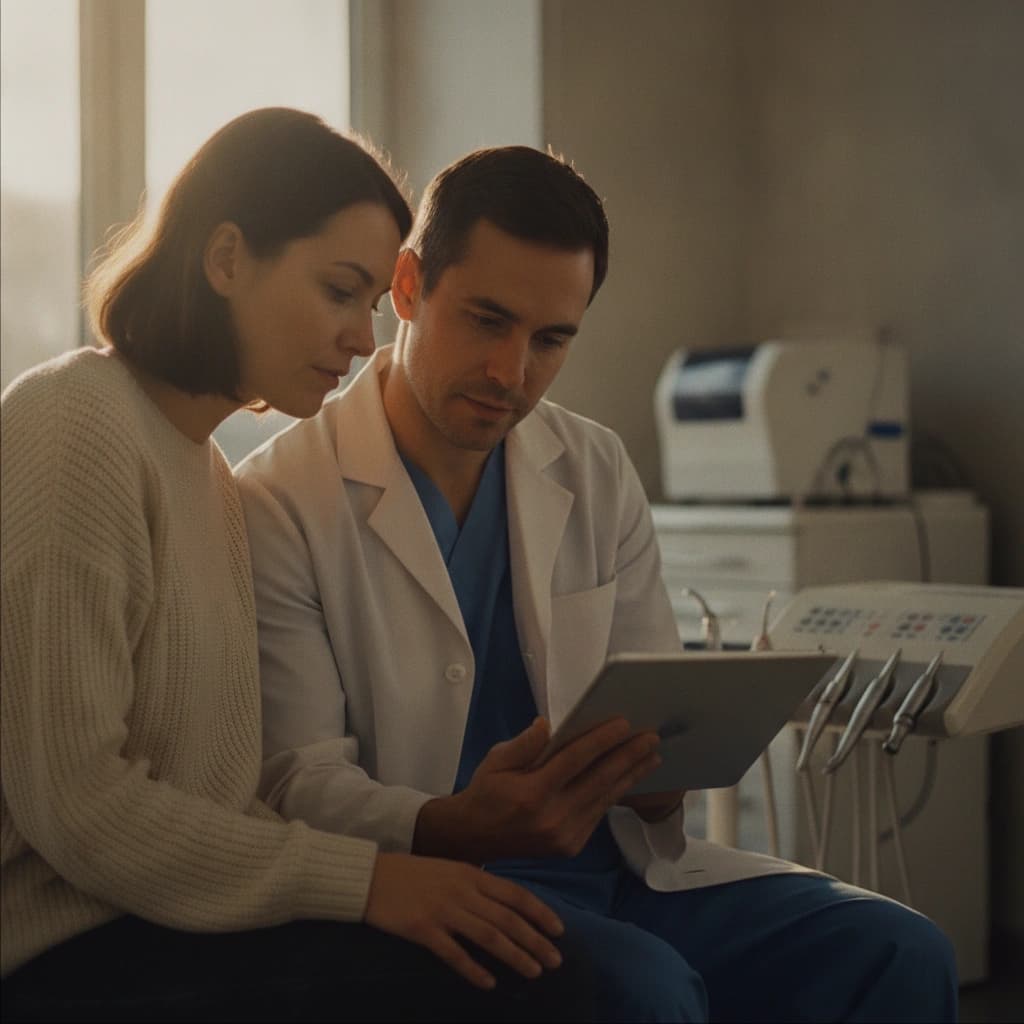
The fastest, cheapest Digital Smile Design alternative for closing cases is a chairside tool that shows the patient their new smile during the consult, not after it. Smile PreVue renders a photorealistic preview in about 30 seconds on an iPad, with no scanner, no per-case fee, and a 3-day free trial, for $149 a month. If you went looking for a DSD alternative, you probably do not want a cheaper version of the full DSD protocol. You want the one moment DSD makes expensive, the moment the patient sees themselves, made fast and affordable enough to use on every consult.
That is the honest framing of this comparison. DSD is a serious design protocol built for complex restorative work. Smile PreVue is a sales tool built to lift case acceptance on cosmetic consults. They overlap in one place, the patient preview, and that overlap is where most practices get sticker shock and start searching for an alternative.
What is Digital Smile Design, and what does it actually cost?
Digital Smile Design is a comprehensive design protocol plus an education ecosystem. It is strong work. For full-mouth reconstruction, detailed esthetic planning, and a clean handoff to the lab, a structured design workflow earns its keep. None of what follows is a knock on the quality of the design itself.
The friction is the cost stack, and in 2026 it is easy to lay out. DSD's per-patient planning service, which covers imaging, the custom design, and the preview appointment, starts around $500 and is typically credited toward treatment if the patient proceeds, per Digital Smile Design's own learning hub. Training to run the workflow ranges from roughly $35 a month for the online tier up to $6,000 or more for immersive in-person programs. On top of that, a full DSD workflow assumes a scanner and the supporting equipment.
So the real number is not one line item. It is a per-case fee, plus training, plus hardware, plus the time to learn a protocol. For a complex restorative practice, that math works. For a general or cosmetic practice that just wants to close more veneer and makeover cases, it starts to feel like buying a tractor to mow a lawn.
It is also worth being honest about the indirect cost. A protocol that requires a separate planning appointment adds a step between the patient's first spark of interest and the moment they see the result. In cosmetic dentistry, those steps are where cases go to die. The slower the loop from interest to visualization, the more time a hesitant patient has to talk themselves out of it, ask a spouse, or simply cool off. Speed is not a luxury feature here. It is part of the close.
Why practices look for a DSD alternative
Here is the pattern we see. A practice loves the idea of showing a patient their future smile. They price out DSD, see the per-case fee and the training curve, and realize they cannot run that on every routine cosmetic consult. So the visualization gets reserved for the big restorative cases, and the everyday consults go back to words, hand mirrors, and stock before-and-after photos of other people.
That is the core problem, and it is worth naming plainly. The consult challenge most practices have is not design depth. It is case acceptance. It is getting a hesitant patient from "let me think about it" to a same-visit yes. For that job, the depth of a full design protocol is not the bottleneck. Speed and cost are.
A visualization tool only changes your numbers if it actually gets used. If it is expensive per case and slow to produce, it sits unused on consult number five of a busy Friday. If it is flat-rate and takes 30 seconds, it gets used on every patient who hesitates. That difference, used sometimes versus used always, is the whole game.
There is a psychology reason underneath the economics, too. The hardest part of selling cosmetic dentistry is the imagination gap. You can see the finished veneers in your head because you have done a thousand of them. The patient cannot. They are being asked to commit thousands of dollars to a result they have to take on faith. Every minute that passes between their interest and a way to actually see the outcome is a minute for doubt to win. A tool that lives behind a per-case fee and a separate appointment puts that proof on the wrong side of the hesitation. A tool that shows the result in the operatory, while the emotion is live, puts it on the right side.
Smile PreVue vs Digital Smile Design: a side-by-side
Both tools can put a preview of a new smile in front of a patient. What separates them is the price model, the speed, and what they were built to do. Here is the honest comparison.
| Factor | Smile PreVue | Digital Smile Design (DSD) |
|---|---|---|
| Price model | $149/mo flat | Per-case planning fee + training + equipment |
| Per-case fee | None | Starts around $500/case (credited if patient proceeds) |
| Hardware required | None, runs on an iPad | Scanner and supporting equipment assumed |
| Time to a preview | About 30 seconds | Longer, design-and-appointment based |
| Learning curve | Minutes | Steeper, protocol plus formal training ($35/mo to $6,000+) |
| HIPAA and BAA | HIPAA-compliant, BAA-covered | Varies by setup |
| Best-fit use case | Chairside cosmetic case acceptance | Full-mouth restorative design and lab handoff |
Read that table the way a buyer would. If your work is complex full-mouth reconstruction and you need a detailed design protocol with a lab handoff, the DSD column is the right tool, and the cost is justified by the complexity. If your goal is to lift acceptance on cosmetic consults, fast, on every patient, at a predictable monthly cost, the Smile PreVue column is built for exactly that.
Which tool is right for your practice?
The cleanest way to decide is to ask what job you are actually hiring the tool to do.
Choose DSD when the case is genuinely complex. Full-mouth rehab, intricate esthetic planning, and lab-driven restorative work reward a structured design protocol, and the per-case investment maps to a high-value, lower-volume case.
Choose Smile PreVue when the job is conversion. When the thing standing between you and the case is a patient who cannot picture the result and says they want to think about it, a fast, photorealistic preview in the operatory is the lever. It works on a $6,000 veneer case and an $1,800 whitening-and-bonding case alike, because the unit cost per preview is effectively zero once you are on a flat monthly plan.
That last point is the quiet advantage. The practices that lift their acceptance numbers are not the ones with the most sophisticated single preview. They are the ones that show a preview on every consult, not just the big ones. A flat $149 a month is what makes "every consult" economically sane.
To be clear, this is not a free pass to skip good consults. Smile PreVue does not replace a treatment coordinator who can read a patient, and it does not turn a no into a yes by itself. It removes the imagination gap, the single hardest part of selling cosmetic dentistry, so the rest of your consult lands.
Frequently asked questions
Is Smile PreVue a replacement for DSD? No. They do different jobs. DSD is a full design protocol for complex restorative planning and lab handoff. Smile PreVue is a chairside conversion tool that shows a patient their new smile to lift case acceptance. Some practices that do heavy restorative work use a design protocol and still want a fast preview tool for everyday cosmetic consults.
Does Smile PreVue need a scanner or special hardware? No. It runs on an iPad. There is no scanner, no extra equipment, and no per-case planning fee.
Is it HIPAA compliant? Yes. Smile PreVue is HIPAA-compliant and BAA-covered, which matters because you are handling patient photos.
How fast is a preview? About 30 seconds, in the operatory, while the patient is still in the chair and the emotion of the consult is live.
Can I try it before paying? Yes. There is a 3-day free trial, so you can run it on real consults before you decide.
If your search for a Digital Smile Design alternative is really a search for the preview moment without the per-case cost and the learning curve, that is exactly the gap Smile PreVue was built to close. Start the 3-day free trial and run it on your next cosmetic consult.
More from the Blog
Why AI Smile Previews Look Fake, and How to Catch It
Why AI smile previews look fake: the image changes more than the teeth. See what goes wrong and how Smile PreVue checks every preview before the close.
ProductSmile Simulation on an iPad: Do You Need a Scanner?
Smile simulation on an iPad needs no scanner and no lab wax-up. What a photo-based preview does chairside, how it compares to DSD and TRIOS, and why it matters.
ProductDentist AI Adoption Statistics 2026: The Chairside Gap
Dentist AI adoption statistics for 2026: 43.3 percent of dentists use AI in the practice, but only 13.2 percent use it with patients. Why the gap matters.