What Is a Good Dental Case Acceptance Rate? 2026 Benchmarks, by Procedure and Practice Type
What is a good dental case acceptance rate in 2026? Average practices sit near 45 to 60 percent, top practices clear 75 to 85. Benchmarks by procedure.
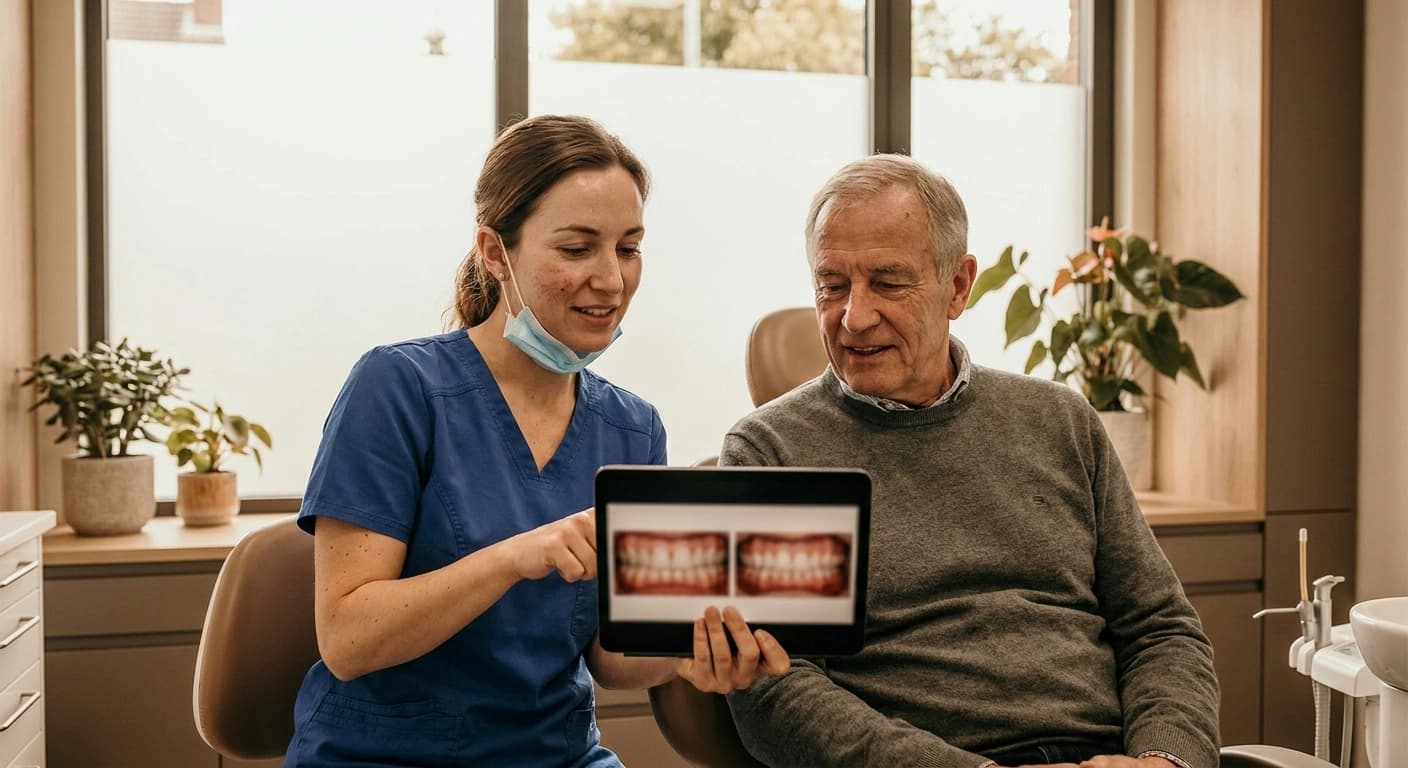
A good dental case acceptance rate in 2026 is 70 percent or higher. The average practice sits closer to 45 to 60 percent, and the top organizations clear 75 to 85 percent. That spread is the whole story: the difference between a practice that accepts half its treatment and one that accepts four out of five cases is rarely the dentistry. It is what the patient could see and what they thought they could afford in the room.
If you own or run a practice, you have probably typed some version of "what is a normal case acceptance rate" into a search bar or into ChatGPT. This is the honest answer, with the 2026 benchmarks broken out by procedure, plus a plain way to measure your own number without fooling yourself.
What is a good dental case acceptance rate in 2026?
Here is the short, quotable version. The average dental practice accepts somewhere between 45 and 60 percent of the treatment it presents. A 2026 case-acceptance index from Henry Schein One puts the average around that range, with one figure citing 45 percent, while top-performing organizations reach 75 to 85 percent. Independent 2026 benchmarking from Dentx lands in the same neighborhood, calling 50 to 60 percent the typical average.
So the working targets are:
- Below 45 percent: you are leaving significant treatment, and revenue, on the table.
- 45 to 60 percent: average. Most practices live here.
- 70 percent or higher: good. This is a healthy, well-run consult process.
- 75 to 85 percent: top tier. Rare, and almost always deliberate.
One caution before you compare yourself to anyone. Case acceptance is measured as accepted treatment value divided by presented treatment value, in dollars, not in patients. That distinction matters. A practice that counts "did the patient say yes to anything" will report a flattering number. A practice that counts dollars accepted against dollars diagnosed will report a truer, usually lower, one. Practices measure this inconsistently, which is exactly why casual comparisons wobble. Pick the dollar-based definition and stay with it.
Case acceptance benchmarks by procedure type
A single practice-wide number hides the most important pattern, because acceptance is not uniform. It tracks price and insurance coverage almost perfectly. The 2026 benchmarks break down roughly like this:
| Treatment category | Typical 2026 acceptance | Why |
|---|---|---|
| Preventive care (cleanings, exams, basic hygiene) | 80 to 90 percent | Low cost, usually covered by insurance, low perceived risk |
| Basic restorative (fillings, single crowns) | 70 to 80 percent | Moderate cost, partial coverage, clear necessity |
| Extensive or elective (implants, full-mouth, ortho, cosmetic) | 60 to 70 percent | High cost, little or no coverage, discretionary decision |
The pattern is the lesson. The higher the price and the lower the insurance coverage, the lower the acceptance. Preventive work almost accepts itself. Cosmetic and other elective work, the treatment a patient could always defer, is the hardest yes to earn.
That is a problem, because elective work is also where the money is. The cosmetic dentistry market is projected to be worth roughly 31.31 billion dollars in 2026, per URBN Dental's 2026 statistics roundup. The cases that accept lowest are the same ones that carry the highest value. A five-point improvement on cosmetic acceptance is worth far more than a five-point improvement on cleanings.
Why the average practice loses a quarter of its cases
Sit with the gap between 50 percent and 80 percent. Thirty points of the same diagnosed treatment, presented by clinicians with similar training, and yet one practice closes it and the other watches it walk. In our experience reading how these consults actually go, the gap is almost never the diagnosis or the treatment plan. It is two silent killers that show up right at the decision.
The first is that the patient cannot picture the outcome. A dentist looks at a mouth and sees the finished case. The patient hears a technical description of veneers or an implant and sees nothing but risk and a large bill. You are asking someone to buy a result they cannot imagine. Most people will not, and "I want to think about it" is the polite way to say so.
The second is that the price lands as a wall instead of a number they can plan around. A twelve thousand dollar figure delivered flat, with no path attached, triggers an immediate no. The same treatment framed with a way to pay, in full or over time, becomes a decision instead of a shock. Neither of these is a diagnosis problem. Both happen in the last few minutes of the consult, and both are fixable.
How top practices close the gap
The practices clearing 75 to 85 percent are not better at dentistry than everyone else. They have removed those two failure points from the room. At a concept level, here is what that looks like.
They let the patient see the result before they decide. A photorealistic before-and-after does what no verbal description can: it turns an abstract plan into something the patient wants. Visualization does not sell a case by itself, but it reliably reduces the hesitation that kills high-ticket elective work. Once a patient sees a version of themselves they like, the conversation shifts from "should I" to "how."
They answer the price objection in the same visit. Instead of sending the patient home to "think about the cost," which usually means the case dies, the strong practices present a way to pay right there. That can mean paying in full by card, or a pay-over-time option so a large number becomes a manageable monthly one. The point is not a script. The point is that the money question gets answered while the patient is still in the chair and still wants the smile.
This is where Smile PreVue fits, plainly. Smile PreVue runs a 30-second, HIPAA-compliant and BAA-covered smile simulation on an iPad, with no extra hardware, so the patient sees their own before-and-after during the consult. It also brings chairside payments and financing into the same moment, so the practice can collect in full or offer patients pay-over-time options through Stripe partners. Smile PreVue is not a lender, and any financing is provided by third parties and subject to approval, so it stays an accelerant on the close, not a promise of approval.
It is worth naming the alternative. Digital Smile Design proved years ago that showing patients their outcome lifts acceptance. The catch is that a full DSD workflow is slow and expensive, better suited to a lab than a busy operatory. The reason visualization has not become universal is friction, not doubt about whether it works. A fast, chairside, no-hardware version is how a normal practice gets the DSD effect without the DSD overhead.
How to measure your own rate honestly
Before you chase a benchmark, measure where you actually stand, and measure it in a way that will not lie to you.
Track dollars presented against dollars accepted over a rolling 90 days, and break it out by procedure category. If you lump everything together, your high preventive acceptance will paper over weak cosmetic acceptance and you will never see the real leak. Category-level tracking is what tells you whether your problem is elective cases specifically, which for most practices it is.
Then watch the follow-up window. A meaningful share of the patients who say "not now" become yeses weeks later, but only if someone re-engages them. A no on consult day is often a "not yet," and practices that treat the unaccepted plan as a live opportunity rather than a closed file recover cases the average practice writes off.
FAQ: dental case acceptance rates
What is the average dental case acceptance rate? Around 45 to 60 percent in 2026, depending on the source and how the practice measures it.
What is a good case acceptance rate? 70 percent or higher. Top practices reach 75 to 85 percent, and a good target for a multi-location group with eight or more locations is at least 70 percent.
Why is cosmetic case acceptance lower than other treatment? Elective and cosmetic work gets little or no insurance coverage, so price and the patient's desire carry the whole decision. That makes it the hardest category to close and the most valuable to improve.
Does letting patients see the result actually help? Yes. Visualization reduces hesitation on high-ticket elective cases, because a patient who can picture the outcome is far more willing to commit than one weighing an abstract description against a large number.
How should I measure my own rate? Use accepted dollars divided by presented dollars, tracked over a rolling 90 days and split by procedure category, so cosmetic performance does not hide inside preventive.
Case acceptance is not a personality trait or a closing gimmick. It is a system, and the two levers that move it most, letting the patient see the result and answering the price question in the room, are the two the average practice skips. Fix those and you move from average toward the top tier on the cases that matter most.
Want to see what showing patients their own before-and-after does to your consult? Case acceptance starts with what the patient can picture. Try Smile PreVue free for 3 days: start your trial.
More from the Blog
Dental Patient Retention Fell to 64%. Case Acceptance Is Why
Dental patient retention fell from 72% to 64% in 2026. Why case acceptance drives patient retention, and what top practices do differently in the chair.
Case AcceptanceNew Patient Case Acceptance Rate: What the First Visit Decides
Your new patient case acceptance rate is buried inside a blended number. Here is what the 2026 benchmarks say and why the first visit decides big cases.
Case AcceptanceDental Case Presentation Software: What It Should Actually Do
Dental case presentation software should show the result and price the plan in one visit. What to look for, and why it lifts case acceptance.