Dental Practice Payment Processing: Close, Then Collect
Dental practice payment processing decides whether a yes becomes money collected. How chairside payment options protect case acceptance in 2026.
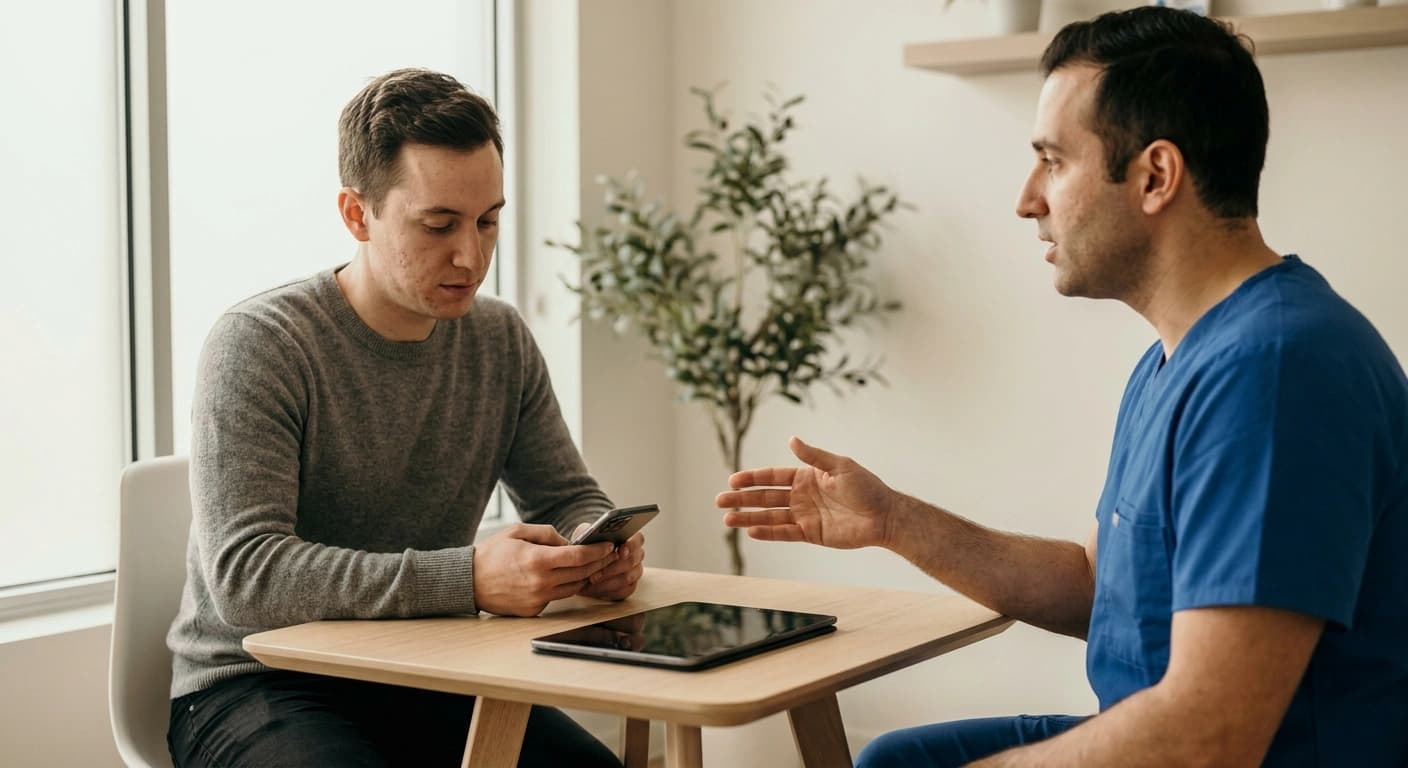
Dental practice payment processing is how a practice actually collects money from the patient, by card, digital wallet, or a pay over time plan, and where in the visit that collection happens. It decides case acceptance because an accepted plan that does not get paid for in the room is a plan that can still fall apart. In 2026, with a larger share of the bill coming out of the patient's pocket rather than the payer's, the collection step stopped being a back office detail. It is the last mile of the close.
Most practices design the clinical conversation carefully and leave the money conversation to whatever happens after it. That is the gap where accepted cases quietly go missing.
What is dental practice payment processing, and why does it decide case acceptance?
There are two separate yes moments in a cosmetic case, and they are not the same event.
The first is the clinical yes. The patient looks at the outcome, believes it is possible for them, and says they want it. The second is the financial yes. The patient commits money to it. Practices invest heavily in the first and mostly improvise the second.
Payment processing is the infrastructure under that second yes. It covers the ways a patient can pay you (card, Apple Pay, Google Pay, Cash App, or a financing partner), what it costs you to take that money, and critically, the point in the visit where the ask happens. Rate shopping your merchant services once a year is a cost exercise. Deciding where in the visit money changes hands is a revenue exercise, and it is worth more.
The reason this matters more now than it did five years ago is simple. The patient is the payer on most of the work you want to grow.
Why is more of the bill landing on the patient in 2026?
The spending data and the billing-desk data point the same direction from opposite ends.
On the spending side, the ADA Health Policy Institute reports that consumer dental spending was up 4 percent as of January 2026 compared with the prior 12 months. Its national figures show $189 billion in dental expenditures in 2024, a 3.6 percent inflation-adjusted increase over 2023, with out-of-pocket spending accounting for the largest share of that total. That 2024 number is the latest full year available and is reported on a lag, so treat it as the direction of travel rather than a snapshot of this month.
On the collection side, a Zentist survey of more than 160 dental billing professionals published in February 2026 found that 78 percent had seen claim denials or payer scrutiny increase over the previous 12 months. Asked which single trend was most likely to affect their business this year, 31 percent named rising patient out-of-pocket costs, the top answer.
The same survey found that 63 percent of practices still reported net collection rates of 90 percent or higher. Zentist frames this as an efficiency paradox, and the framing is fair. The numbers hold up, but they hold up because staff are absorbing more manual chasing to keep them there. That is a cost you pay in labor rather than in write-offs, which makes it easy to miss on a P&L.
For a cosmetic practice the implication is sharper than it is for general dentistry. Elective work was already mostly patient-funded. If your payment process was designed around insurance verification and statements, it was designed for the part of your revenue that is growing the slowest.
Where does the money leak between the yes and the deposit?
Four places, in roughly the order they show up.
The handoff walk. The patient says yes in the operatory, then walks to a desk in a different room to talk to a different person about money. Everything that made the yes feel real, the image, the conversation, the clinician's confidence, stays behind in the operatory. What arrives at the desk is a number without its context.
The printed estimate. A treatment plan the patient can read but cannot act on is an invitation to defer. Anything a patient takes home to think about becomes a decision made without you in the room.
Deferred billing. Moving the balance to a statement converts a decided patient back into an undecided one, at home, weeks later, next to every other bill. The clinical case for the work does not travel with the envelope.
Staff time. This is the invisible one. Every deferred payment becomes a task: a call, a reminder, a follow-up on the follow-up. The February 2026 survey found strong collection rates propped up by exactly this kind of manual work. Collections that require chasing are not the same asset as collections that closed themselves.
None of these are billing problems. They are all timing problems.
What should chairside payment collection look like?
Four principles, stated at the level of the frame rather than the script.
Price the plan in the room. The number should exist while the patient is still looking at the outcome. A plan that has to go somewhere else to get priced has already lost the moment that made it compelling.
Offer the ways people actually pay. That means cards, but also the digital wallets patients use for everything else, and a pay over time option for patients whose objection is cash flow rather than desire. A patient who wants the work and cannot write one check today is not a lost case, they are a financing case.
Keep it one conversation. The person who presented the plan should be able to take the payment. Every handoff is an opportunity for the decision to cool.
Ask while the answer is still yes. Momentum is a real asset and it has a short half-life. The right time to ask for money is when the patient has just told you they want the outcome.
What this does not mean is scripting the patient into a corner. The frame here is removing friction from a decision the patient already made, not manufacturing one they have not.
Chairside, front desk, or statement: an honest comparison
Each of these works somewhere. The question is which one you use for high-ticket elective work.
| Where money is collected | When the patient decides | What has to go right | Typical failure mode |
|---|---|---|---|
| Chairside, at the moment of the yes | While still looking at the outcome | The plan is priced in the room and the presenter can take payment | The practice has no way to price or collect in the operatory |
| Front desk, after the walk | After the clinical conversation has ended | Momentum survives the hallway and the desk can answer money questions | Patient leaves with a printout and an intention to call back |
| By statement, after the visit | Days or weeks later, at home, alone | The patient re-decides without anyone there to answer objections | The balance ages, staff chase it, some of it never arrives |
To be fair to the front desk: for a cleaning, a filling, or a copay, it works fine. The walk costs you nothing when the amount is small and the decision was never in doubt. It is the five-figure elective case where those thirty seconds in the hallway are the most expensive thirty seconds in the practice.
This is also where design-first tools stop short. Digital Smile Design and similar platforms are built to produce a beautiful plan, and they do that well. But the plan still has to be paid for, and that step almost always lives in a completely different system, on a different day, run by a different person.
Where does Smile PreVue fit?
Smile PreVue prices the treatment plan chairside from the practice's own fee schedule, then lets the patient pay in full by card, Apple Pay, Google Pay, or Cash App, or pay over time through Affirm, Klarna, or Sunbit, all surfaced through Stripe. The practice is paid in full upfront.
The reason payment belongs in the same tool as the simulation is the whole argument of this post. The patient sees the outcome and settles the money in one sitting, in one room, with one person. That is what a same-visit yes actually requires.
A few specifics worth stating plainly. Smile PreVue is not a lender or a bank. Pay over time is provided by third-party partners and is always subject to their approval. The founding processing rates are 3.2 percent per card transaction and 6.5 percent on financed cases, and those are the practice's processing rates, not anything the patient pays. Our dental payment processing comparison shows how those rates stack up against CareCredit. Card data never touches Smile PreVue servers, because payments run through Stripe at PCI DSS Level 1.
There is no hardware and no card reader to buy. Setup takes about ten minutes.
Frequently asked questions
Can a dental practice take payment chairside instead of at the front desk? Yes. With a tablet-based system that carries both the treatment plan and the payment options, the person presenting the case can collect without a handoff or a card reader.
Does offering more payment options change case acceptance, or is it just convenience? Both, but the acceptance effect comes from timing more than from choice. Removing the delay between the decision and the payment is what protects the case. More options mainly matter for the patient whose objection was cash flow.
What does dental practice payment processing typically cost? It varies by processor and by whether the transaction is a straight card payment or a financed one. Financed transactions cost the practice more because a third party is carrying the credit risk. Smile PreVue's founding rates are 3.2 percent on card and 6.5 percent on financed cases.
Is patient financing the same thing as payment processing? No. Processing is how you take a payment. Financing is a third party paying you now so the patient can pay them over time. Most practices need both, for different patients.
Does Smile PreVue handle payments, or only the simulation? Both. The simulation closes the case and the payment layer collects for it, in the same chairside flow. You can read more about patient payments and financing on the payments page.
If your accepted cases are outrunning your collected ones, the gap is almost never the treatment plan. It is the walk between the operatory and the desk.
Download Smile PreVue and start a 3-day free trial to price and collect for the case in the same visit that closed it.
More from the Blog
Dental Front Office Sales Training Starts at the Phone
Dental front office sales training: why case acceptance is decided at the phone and the estimate, before the consult, and what to teach the front desk.
Case AcceptanceDental Staff Turnover and Case Acceptance: The Hidden Link
Dental staffing turnover and case acceptance are tied together. When a hygienist or coordinator leaves, the close leaves too. Build a close that stays.
Practice GrowthTracking Unscheduled Treatment: What Your Report Misses
Tracking unscheduled treatment starts with a number most practices cannot trust. Here is what the report actually counts, what it hides, and how to fix it.