Dental Patient Retention Fell to 64%. Case Acceptance Is Why
Dental patient retention fell from 72% to 64% in 2026. Why case acceptance drives patient retention, and what top practices do differently in the chair.
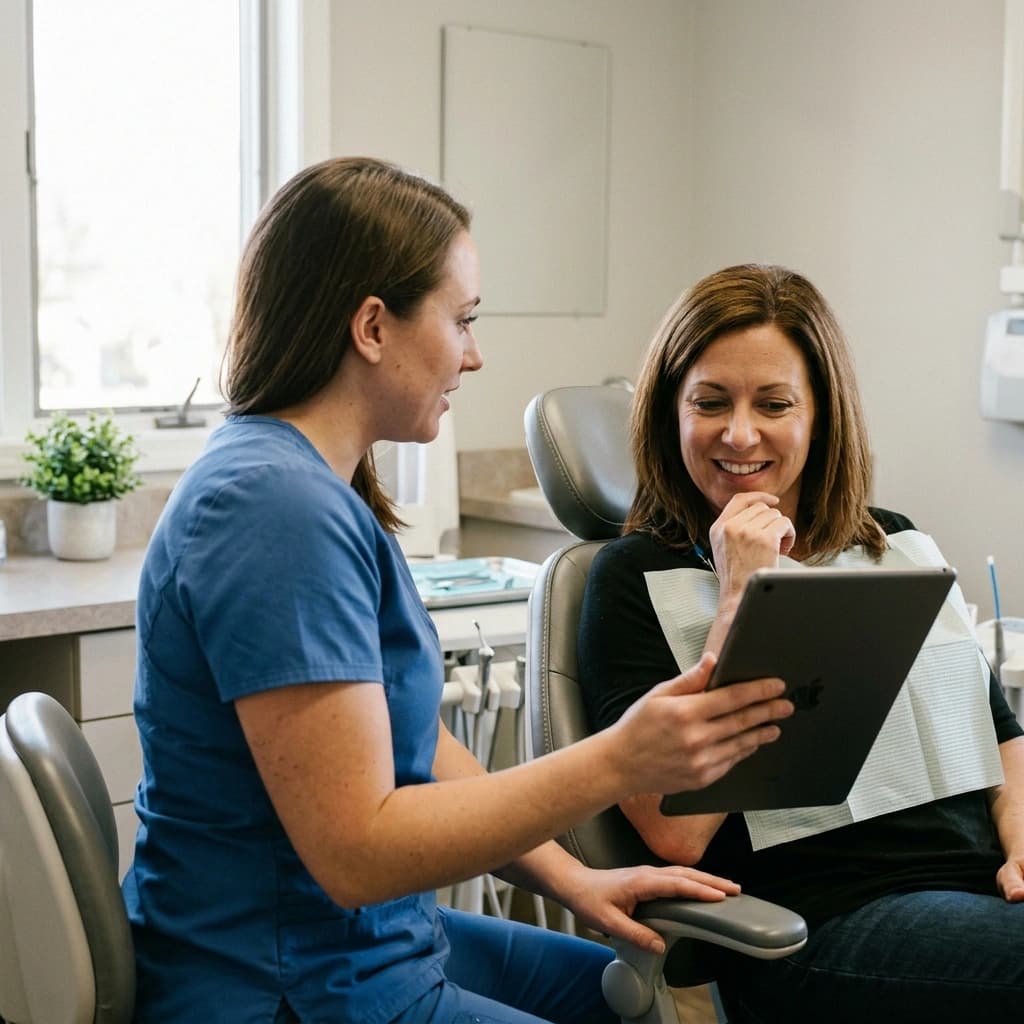
The average dental practice now keeps 64% of its patients from one year to the next, down from 72% the year before, according to Henry Schein One's 2026 Catalyst Index, published in May 2026. The same report puts average case acceptance at 45% and top performers at 75%. Those two numbers are connected: a patient who leaves with unaccepted treatment has no next appointment, and a patient with no next appointment is the one most likely to drift away.
Most practices track retention on one dashboard and case acceptance on another. This post argues they are the same line, looks at what the 2026 data says the best practices do differently, and names the three numbers worth watching this quarter.
What is a good dental patient retention rate in 2026?
Patient retention is the share of your active patients who come back and are seen again inside a set window, usually a year. It is the quiet number behind every production report. New patients get the attention, but retained patients pay for the practice.
The benchmark moved the wrong way this year. Henry Schein One's fifth annual Catalyst Index reports that overall patient retention fell from 72% to 64% year over year, and flags the drop as a significant concern for the industry. An eight-point drop means roughly one more patient in every twelve did not come back.
One caution before you compare. The Catalyst Index does not publish its exact retention formula, and practices measure retention in different ways (active patient definitions, 12 versus 18 month windows, hygiene only versus all visits). So the best first comparison is your own number against your own prior year. If yours dropped too, you are in the same current as the industry. If it held, find out why and protect it.
Why does case acceptance drive patient retention?
Think about where patients actually leave. It is rarely after a great visit with a clear plan. It is after a visit that ended in "I want to think about it."
The unaccepted case is the quiet exit. The patient walks out without a next appointment on the book. The practice makes a follow-up call, maybe two. Then the chart goes quiet. Nobody decided to lose that patient. The practice just never gave them a reason to come back.
Pending treatment is the highest-risk state a patient can be in. Compare two patients who both came in for a cosmetic consult:
- The patient who said yes has a prep date, a delivery date, and follow-up visits. They have a reason to answer the phone, and every visit deepens the relationship.
- The patient who said "maybe" has nothing scheduled. They may also feel a little awkward about coming back, because they know the practice is waiting on an answer. Avoidance is easier than a hard conversation.
That second patient does not show up as a lost case on any report. They show up months later as a retention problem.
For a cosmetic practice, the loss compounds. A declined veneer case is not one lost fee. It is often the loss of years of hygiene visits, whitening touch-ups, the next case, and the family and friends that patient would have referred. That is why a drop in retention and a flat acceptance rate should worry you together. They are usually the same patients.
What do the top practices do differently in the chair?
The headline finding of the 2026 Catalyst Index is that growth follows clinical performance, not size. The top performers, the practices reaching 75% case acceptance, were marked by consistency in clinical care, patient experience, and execution rather than by how many locations they run.
As DrBicuspid's summary of the report put it, practices investing in chairside communication and patient trust are better positioned for growth than those focused mainly on expansion. Dr. Ryan Hungate, Chief Clinical and Strategy Officer at Henry Schein One, said in the release: "When clinicians are supported to deliver complete care and clear communication, patients move forward with treatment."
Read that with retention in mind. The practices winning on acceptance are winning in the operatory, during the visit. That matters because of how cosmetic patients decide.
Patients decide on certainty, and certainty is built in the visit. A cosmetic patient is weighing a large, elective, personal purchase. The question in their head is not "is this clinically sound?" It is "will I like how I look?" If they leave without an answer to that question, the decision stalls. A follow-up email cannot build the same certainty the visit did not.
The emotion that brought them in has a shelf life. The patient booked the consult because something about their smile bothered them enough to act. That motivation is strongest in the chair. Every day after the visit, ordinary life competes with it: the car repair, the vacation, the kid's braces.
A same-visit yes is a retention tool. When the patient commits in the chair, the next appointment goes on the book before they leave. The practice is not chasing a decision. It is scheduling care. That is the difference between a patient who stays and a patient who fades.
We are keeping this at the concept level on purpose. How you run the conversation belongs to your team and your patients, and the case acceptance hub covers the frameworks behind it in more depth.
How does a smile preview change the retention math?
If certainty is what closes the case, the fastest way to create it is to show the patient the outcome while they are still in the chair.
That is what Smile PreVue does. It generates a photorealistic preview of the patient's own smile in about 30 seconds, on an iPad, with no scanner or extra hardware. It is HIPAA-compliant. The patient sees their own result during the consult, while the reason they came in is still front of mind, instead of trying to imagine it from a verbal description or someone else's before-and-after photos.
Here is how the three common approaches compare on the moment that matters for retention.
| Approach | When the decision happens | What the patient has in hand when they leave | Retention effect |
|---|---|---|---|
| Status quo consult (verbal description, stock before-and-after photos) | Later, at home, if at all | A treatment plan and a price, but no picture of their own result | High risk: "I'll think about it" with no next visit booked |
| Recall-only reactivation (postcards and calls after the no) | Weeks or months later, after the motivation has cooled | Reminder mail and voicemails | Recovers some patients, but starts after the risky moment has passed |
| Same-visit close with a Smile PreVue preview | In the chair, during the consult | Their own smile preview and a scheduled next appointment when they say yes | Lower risk: the next visit is on the book before they leave |
For comparison, a Digital Smile Design (DSD) workflow usually brings the design back at a later appointment, after a photo protocol and design work that often involves a lab. That can produce excellent planning. But for retention, the window that matters is the first visit, and a same-visit preview puts the answer inside that window.
A few specifics worth knowing:
- About 30 seconds per preview, generated chairside.
- No hardware. It runs on an iPad.
- HIPAA-compliant.
- One plan: $149 per provider per month, or $1,199 per year, with the preview included in the subscription. No add-ons, no tiers.
- 3-day free trial through the App Store.
One honest limit. We have not measured a retention lift for practices using Smile PreVue, so we will not quote one. The claim here is about mechanism: a patient who decides in the chair gets a next appointment, and a patient with a next appointment is far easier to keep.
Which three numbers should a practice watch this quarter?
You do not need a new dashboard. You need three numbers side by side, reviewed together at least once a month.
- Retention rate against your own prior year. Use a consistent definition every time. The trend matters more than matching the 64% industry figure exactly.
- Case acceptance rate on presented cosmetic treatment. Count only treatment that was actually presented, and track cosmetic cases separately from restorative. The 45% average and 75% top-performer figures from the Catalyst Index give you a range to place yourself in.
- Patients with pending, unaccepted treatment and no future appointment. This is the list where your retention problem lives. It is also the number most practices never look at, because it does not appear on a standard production report.
The reason to watch them together is simple. If acceptance falls, the third number grows, and a few months later, retention follows. Catching it at the acceptance stage is cheaper than recovering patients after they have already drifted.
What you do with that third list is a team decision. The bigger win is making it shorter in the first place, by closing more cases before the patient leaves the chair.
Frequently asked questions
What is the average dental patient retention rate? Henry Schein One's 2026 Catalyst Index reports average patient retention of 64%, down from 72% the year before. The report does not publish its exact formula, so compare against your own prior year first.
What is a good dental case acceptance rate in 2026? The same report puts the average at 45% and top-performing practices at 75%.
Does case acceptance affect patient retention? Yes. A patient who leaves with unaccepted treatment usually has no next appointment on the book, which makes them the patient most likely to drift away. A patient who accepts treatment has scheduled visits and a reason to stay.
How fast is a Smile PreVue preview? About 30 seconds, on an iPad, with no extra hardware. It is HIPAA-compliant, and there is a 3-day free trial through the App Store.
Does Smile PreVue include patient follow-up tools? No. Smile PreVue does not run recall or reactivation campaigns. It helps close the case in the chair, which is where the retention decision is really made.
Keep the patient by closing the case
The 2026 retention drop is not a marketing problem to be solved with more postcards. It starts in the operatory, when a patient who came in motivated leaves without seeing what they would get. Close more of those cases in the visit, and the retention line takes care of more of itself.
If you want your next cosmetic patient to see their own smile before they leave the chair, start your 3-day free trial of Smile PreVue.
More from the Blog
What a Lost Cosmetic Case Costs a Dental Practice
What does a lost dental case cost? Run the math on declined cosmetic treatment, from the 45% average acceptance rate to what one more yes a week is worth.
ProductSmile Simulation on an iPad: Do You Need a Scanner?
Smile simulation on an iPad needs no scanner and no lab wax-up. What a photo-based preview does chairside, how it compares to DSD and TRIOS, and why it matters.
Practice GrowthDropping Insurance Networks? Case Acceptance Is the Job Now
22.2% of dentists had dropped some insurance networks by Q1 2026 and 35% planned to. The fee-for-service shift makes cosmetic case acceptance the core skill.