The Case That Closes 30 Days Later: Following Up on Unaccepted Treatment Plans
Most cosmetic cases are not won or lost in the chair. Here is why following up on unaccepted treatment plans is the highest-leverage habit in a practice.
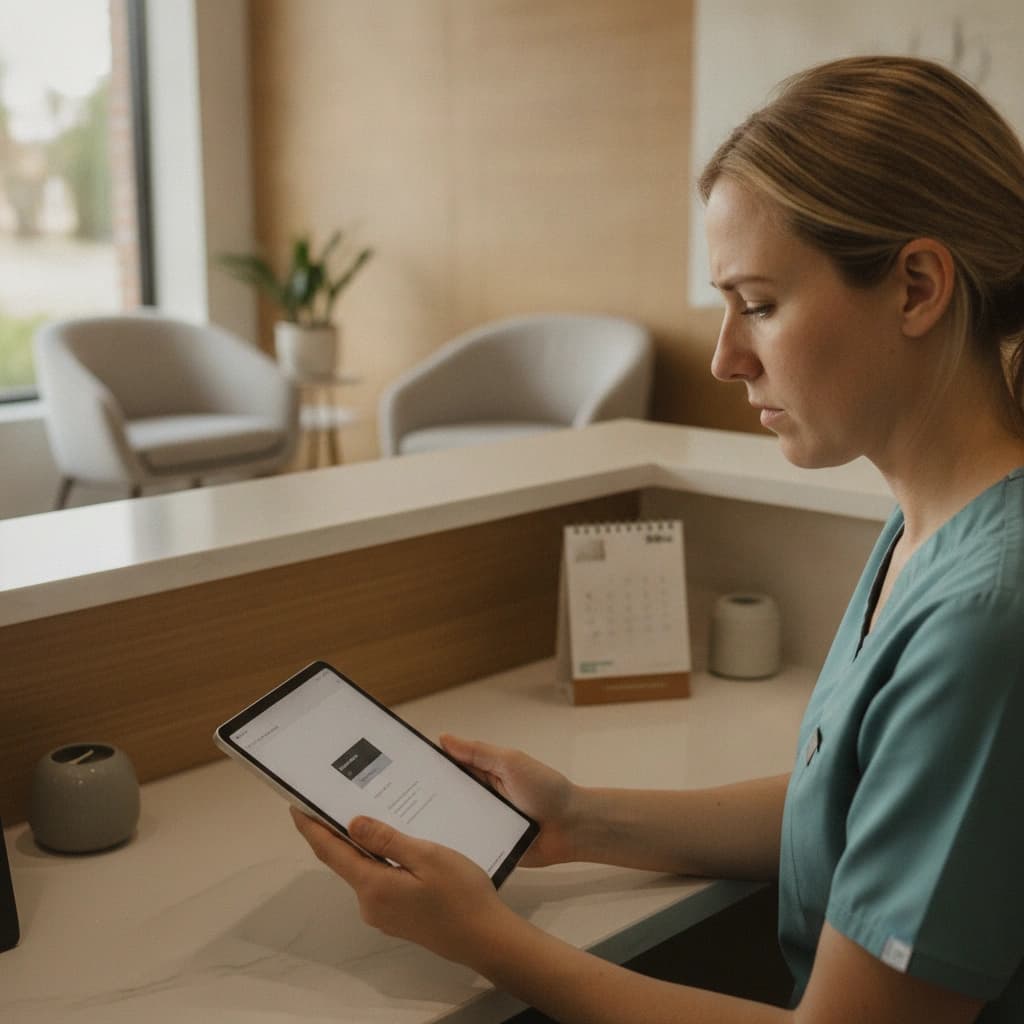
There is a number that should bother every practice owner, and it has nothing to do with chair time or production goals. It is the share of treatment you diagnose that the patient never accepts.
Industry benchmark reporting in 2026 puts that figure as high as 65 percent of proposed treatments going unaccepted. Look at it by dollar value and it gets worse: acceptance of diagnosed treatment tends to land closer to 35 to 45 percent, which means the most expensive cases, the comprehensive and elective cosmetic work, are exactly the ones most often left on the table. National case acceptance averages run roughly 50 to 60 percent for general care, and the high-ticket cosmetic cases fall well below that line.
Here is the part most practices miss. A meaningful share of the yeses that do come do not arrive in the operatory at all. They arrive 30 or more days later, long after the consult ended, after the patient went home and sat with the decision. The case was not lost in the chair. It was decided in the quiet weeks that followed.
That gap is the single biggest untapped revenue line in most practices. And almost nobody works it well.
The number that should bother every practice owner
Run the math on your own schedule for a second. If you are presenting cosmetic cases and accepting 40 percent of the dollar value, the other 60 percent did not vanish. Those patients were interested enough to sit through a consultation. They have the clinical need. Many of them want the result. They just walked out without a yes.
A no at the chair is rarely a final no. It is an unfinished decision. The patient is not rejecting the outcome, they are deferring a hard choice they did not feel ready to make in the moment.
So the lost revenue is not really in the consults you lose. It is in the plans you never follow up on. The practice that treats an unaccepted plan as a dead end is leaving its most valuable cases to chance. The practice that treats it as the start of a pipeline is the one that closes the case that comes back a month later.
What a patient is actually weighing in the 30 days after they leave
To follow up well, you have to understand what is actually happening in the patient's head after they leave. It is not just price, even though price is the easy thing to blame.
For high-ticket cosmetic decisions, the heaviest weight is usually uncertainty about the result. Money matters, but a patient who is genuinely confident in the outcome finds a way to afford it. A patient who cannot quite picture themselves with the new smile will stall no matter how clean the financing options are.
In those 30 days, the patient is quietly cycling through a few questions:
- Will this actually look the way I am imagining, or will I regret it?
- Is this the right time, or should I wait?
- Can I picture myself walking around with this smile every day?
Notice that only one of those is about money. The other two are about confidence and self-image. This is the psychology of an elective purchase: the fear of regret on something visible and permanent outweighs the sticker price more often than we admit.
The takeaway is not a script. It is a frame. If the doubt living rent-free in the patient's mind is about the result, then more pressure about the price is the wrong lever. You have to address the doubt that is actually there.
Why most follow-up quietly fails
Most follow-up fails for a reason that feels counterintuitive: it reopens the wrong conversation.
The generic check-in call goes something like "Hi, just following up to see if you had any questions about your treatment plan and whether you would like to schedule." On the surface it is polite. Underneath, it lands as sales pressure, and worse, it reopens the price negotiation. The patient hears "are you going to spend the money yet," gets defensive, and the soft no hardens into a firmer one.
There are two structural problems here.
First, follow-up with no anchor gives the patient nothing new to react to. You are asking them to make the same decision they already deferred, with the same information they already had. Nothing changed, so why would the answer change.
Second, the call quietly shifts the topic back to cost, which was never the real obstacle. The patient was uncertain about the result. The follow-up made it about the bill.
The practices that close cases late are not the ones that called more often. They are the ones that kept the original emotional reason alive. The patient said yes a month later because the thing that made them want the new smile in the first place never faded. That is a completely different discipline than dialing the same list with a little more persistence.
This is also where legacy design tools show their limits. Something like Digital Smile Design produces a beautiful chairside reveal, but the output is built for the operatory moment, not for the 30-day window where the case is actually decided. A reveal the patient cannot revisit at home does not help them through the doubt that surfaces after they leave.
What good follow-up looks like at the concept level
You do not need a 12-step sequence. You need a few principles, applied consistently. Treating the dental sales process as a system that continues past the chair is most of the battle.
Reconnect the patient to the outcome, not the invoice. Every touch should put the result back in front of them, not the cost. The goal is to bring back the feeling they had when they first imagined the change, not to ask whether they have made up their mind.
Make the next step low-friction and concrete. A vague "let me know" puts all the work on the patient. A clear, small, specific next action lowers the activation energy. The easier you make it to move forward, the more late yeses you capture.
Track unaccepted plans as a real pipeline. This is the operational discipline almost nobody has. Unaccepted plans should be a living list with owners and timing, the same way a sales team tracks open opportunities, not a forgotten note in a chart. You do not need to publish a copy-paste call-and-text sequence to do this. You need to decide that these cases are worth managing on purpose.
The point is that follow-up is not a personality trait or a matter of being more persistent. It is a system, and systems can be built.
The unfair advantage: giving the patient something to come back to
Here is the quiet thesis underneath all of this. Follow-up works best when the patient has something concrete to return to.
Think about the difference between two patients a month after their consult. One went home with a treatment plan and a number on a page. The other went home having already seen a realistic preview of their own future smile. When the follow-up touch arrives, the first patient is being asked to re-imagine a result they were never quite sure of. The second patient has a memory worth returning for. The image did the work that a voicemail never could.
That is the difference between follow-up that reopens a negotiation and follow-up that reconnects a patient to something they already wanted. The patient who saw their own smile is not deciding whether to spend the money on an abstraction. They are deciding whether to go get the thing they already pictured themselves having.
This is exactly where Smile PreVue earns its place. It is not a simulation app you show off once in the chair. It is the anchor that makes the entire follow-up window land, because the patient walks out with a concrete reason to come back, and your team has something real to reconnect them to instead of a cold check-in call. The case that closes 30 days later closes because the patient never lost sight of the outcome.
If unaccepted plans are the biggest revenue line you are not working, the fix is not calling harder. It is giving every patient something they cannot stop thinking about, and then having a system that brings them back to it.
You can see how this changes your follow-up with a 3-day free trial on the App Store. Show the patient the smile, and the 30-day decision starts working in your favor.
More from the Blog
The Treatment Coordinator KPIs That Predict Case Acceptance
The treatment coordinator KPIs that actually predict case acceptance, the vanity numbers to stop tracking, and the one leading indicator you can move.
Case AcceptanceFinancial Coordinator vs Treatment Coordinator
Financial coordinator vs treatment coordinator: what each role owns, why the split changes case acceptance, and when one person should still do both.
Practice GrowthThe Cosmetic Consultation Handoff: Where Cases Die
The cosmetic consultation handoff is where case acceptance quietly leaks. Why the dentist-to-coordinator gap loses cases, and how to close it.