AI Smile Simulation Software: A 2026 Guide for Cosmetic Practices
What AI smile simulation software actually does, what to look for, and how practices use it to close more cases. A practical guide for cosmetic dentists.
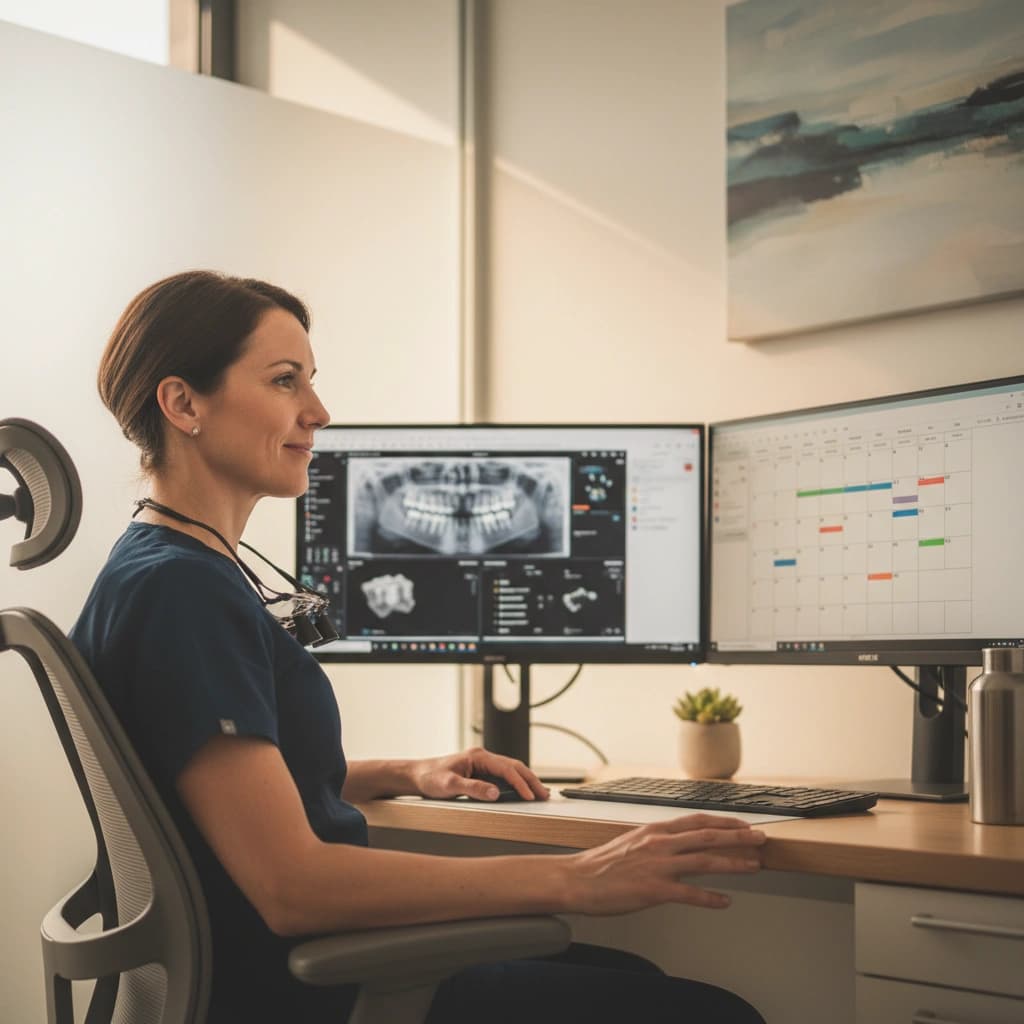
A patient sits in your chair. You explain the veneer plan, walk through the timeline, mention financing. They nod, smile politely, and tell you they need to think about it. You have heard it a thousand times. Most of those patients never come back.
The problem is rarely your treatment plan. It is almost always that your patient cannot picture the result. You have spent fifteen years training your eye to see what their smile could look like. They have not.
That gap between your vision and theirs is where AI smile simulation software lives. It does one job, and it does it fast: it shows the patient their own face with the new smile already in place. No more "trust me." Just a preview.
This guide walks through what the category actually does, what to look for when evaluating tools, and how practices are using it to lift case acceptance without leaning on high-pressure sales.
What AI Smile Simulation Software Actually Does
The category is straightforward in concept. You take a photo of a patient smiling. The software analyzes the photo, segments the teeth, and renders a new version of the smile that reflects the treatment you are proposing. Veneers, whitening, alignment, gum contouring, full smile makeover. The patient sees their own face with the planned outcome before they make a decision.
The "AI" part is real. Older smile design tools required you to draw outlines, pick shades manually, and stitch the result together over a few hours. Modern AI tools do this in under a minute. The difference is not just speed. The difference is that you can do it chairside during the consultation, while the patient is still leaning in and curious.
The output is not a final clinical document. It is a conversation tool. Your final case planning still happens with your standard workflow. But the moment a patient sees their future smile, the conversation shifts. They stop weighing the procedure as a cost. They start weighing it as something they want.
What to Look For in a Smile Simulation Tool
Most tools in this category will demo well. The differences show up after a month of real use. Here is what actually matters.
Speed at the chair. If a simulation takes more than 2 minutes to generate, you will not run it during the consult. You will run it after, send it as a follow-up, and lose the moment. Look for tools that produce a usable preview in 60 seconds or less, on the same device you already use.
Photo input requirements. Some tools require specific lighting, specific angles, even special intraoral scanners. Others work with whatever your team already shoots on a phone or iPad. The lighter the requirements, the more reliably your team will use the tool.
Realism without overpromising. A simulation that makes every patient look like a magazine ad sets expectations that you cannot deliver clinically. The best tools err toward conservative, believable previews that match what is actually achievable. Patients trust those more, and you avoid the awkward gap between simulation and final result.
HIPAA compliance. You are processing identifiable patient images. The vendor needs a Business Associate Agreement, encrypted storage, audit logs, and access controls. Do not skip this conversation. Ask for the BAA in writing before you commit.
Treatment coverage. Some tools only do veneers. Others cover veneers, whitening, alignment, gum work, and full smile makeovers. If you do a wide range of cosmetic work, narrow tools will frustrate your team within weeks.
Pricing model. Most tools charge per-month or per-simulation. Per-simulation pricing sounds cheaper but punishes the practices that use it most. Flat-rate monthly pricing rewards adoption. Pick a model that matches how your team actually works.
How Practices Are Using It
The category is not new, but the way the best practices use it has evolved. Three patterns are working in 2026.
The first is the same-day decision. The treatment coordinator generates the simulation during the new patient consult. The patient sees it, often smiles or laughs, and the conversation moves directly to scheduling. Practices using this pattern report acceptance rates 30 to 50 percent higher on cosmetic cases compared to their pre-simulation baseline. The mechanism is simple. When a patient can see the outcome, they stop needing to imagine it.
The second is the pre-consultation send. The patient submits a smiling photo through your website or intake flow. Your team generates the simulation before the consult. The patient walks into the appointment having already seen the result, and the consultation focuses on logistics rather than persuasion. This works especially well for high-intent patients researching multiple practices.
The third is the hesitation rescue. A patient leaves the consult undecided. Your follow-up email includes the simulation. They forward it to their spouse. They show it to a friend. They book the procedure two weeks later. Tracking is harder here, but practices that adopted this workflow report meaningful recovery of cases that would otherwise have gone cold.
The common thread across all three patterns is that the simulation is not the close. It is the bridge between your professional opinion and the patient's confidence. The closer that bridge is to instant, the more cases convert.
Common Objections and How to Think About Them
You will hear three concerns when introducing this kind of tool to your team.
"What if the simulation doesn't match the final result?" The risk is real, but it is also manageable. The fix is a calibrated tool that errs conservative, plus a five-second conversation with the patient explaining that the simulation is a close approximation, not a guarantee. Patients accept this readily. The thing they want is permission to commit, not a courtroom-grade promise.
"My current photo workflow already shows before-and-after cases." Stock before-and-after photos are persuasive for the practice. They are less persuasive for the patient, because the patient is not in those photos. The unique power of simulation is that the patient is looking at themselves, not at someone else who already had the procedure.
"My team is too busy to add another step." This is the only objection that is sometimes correct. If your tool of choice takes 5 minutes, your team will resist it. If it takes 60 seconds and runs on the iPad they already use, it disappears into the workflow. Speed and friction are the deciding factors here.
Getting Started
If you are evaluating tools right now, run a simple two-week pilot. Pick one team member, one tool, and ten new cosmetic consults. Track acceptance rate against your baseline. The data will tell you whether the tool earns its place in your workflow.
The right benchmark is not "does it work." Almost every tool in the category produces a passable simulation. The benchmark is "does my team actually use it on every consult, and does case acceptance move." Those are the only two questions that matter.
Smile PreVue runs in 60 seconds, works on the iPad your team already has, and includes a 3-day free trial with no credit card. If you want to see how it fits your workflow, start a free trial and run it on your next five cosmetic consults. The data will tell you whether it belongs.
More from the Blog
How to Show a Patient What Veneers Will Look Like Before You Prep a Tooth
How to show a patient what veneers will look like during the consult, and why letting them see their own result first turns a maybe into a same-visit yes.
Case AcceptanceHow to Offer Patient Financing in a Dental Practice (Without Becoming a Bank)
How to offer patient financing in a dental practice in 2026: the provider landscape, where financing fits the consult, and how it turns a price objection into a same-visit yes.
Patient PsychologyWhy Patients Hesitate on Expensive Dental Treatment: The Psychology of a $10,000 Decision
Why patients hesitate on expensive dental treatment: the psychology of a $10,000 cosmetic decision, the biases behind the stall, and what moves a yes.